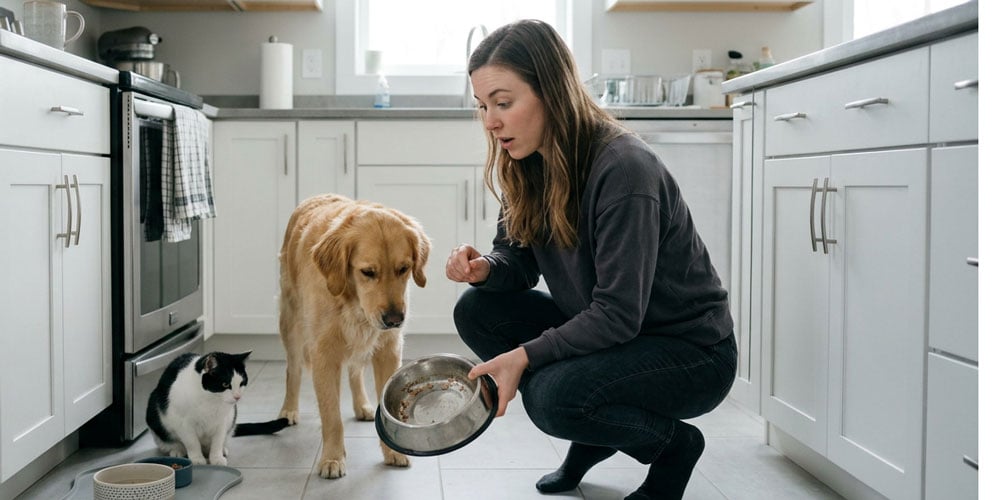
When was the last time you washed your pet's food bowl?
Not just rinsed it under the faucet. Actually washed it with soap, scrubbed away the residue and dried it properly.
If you're struggling to remember, you're probably not alone.
We spend plenty of time choosing the right food for our dogs and cats. But there's something we might be overlooking: the bowl we're serving it in.
Even a bowl that looks perfectly clean can contain leftover food, saliva and microorganisms you can't see. And under the right conditions, some harmful bacteria can survive or multiply.
So, could your pet's food bowl be creating a hygiene problem without you realizing it?
1. Your Pet's Bowl Might Not Be as Clean as It Looks
Here's something worth thinking about: would you eat breakfast and dinner from the same unwashed plate every day?
Probably not. But many pets do exactly that.
Every time your dog or cat eats, saliva mixes with tiny food particles and moisture inside the bowl.
Over time, this residue can create conditions that allow microorganisms to build up.
Some bacteria are harmless, but others can cause illness in pets or people.
The important thing to remember is that you can't reliably judge a bowl's cleanliness just by looking at it.
A quick rinse might remove visible crumbs, but it doesn't necessarily remove the residue and germs left behind.
2. What Is That Slippery Feeling Inside the Water Bowl?
Have you ever touched the inside of your pet's water bowl and noticed a slippery coating?
That could be biofilm.
Biofilm is a community of microorganisms attached to a surface and surrounded by a protective layer they produce.
It can develop on surfaces that remain wet, including water bowls and drinking equipment.
Not every biofilm contains dangerous bacteria, but its presence is a good reminder that simply topping up the water isn't the same as cleaning the bowl.
What to do: Empty your pet's water bowl, wash it with soap and water, rinse thoroughly and refill it with fresh water every day.
If you use a pet drinking fountain, remember to clean the reservoir, pump and other components according to the manufacturer's instructions.
3. Wet Food Can Create Problems Faster Than You Think
Wet food is convenient, appealing and often a favorite among cats and dogs.
But unlike dry kibble, wet food contains a substantial amount of moisture.
That means leftover wet food shouldn't be left sitting in a bowl indefinitely, especially in a warm room.
Food safety risks increase when perishable food remains at unsuitable temperatures.
Try these simple habits:
- Serve portions your pet is likely to finish.
- Remove uneaten wet food promptly rather than leaving it out for hours.
- Refrigerate unused canned or pouched food immediately, following the label's storage instructions.
- Wash the bowl thoroughly after each wet food meal.
- Discard food that smells unusual, appears spoiled or has been stored improperly.
If your cat prefers to graze throughout the day, consider offering smaller, fresh portions rather than leaving wet food exposed for extended periods.
4. Even Dry Kibble Isn't Completely Risk-Free
It's easy to assume dry food doesn't require the same attention because it contains less moisture.
However, dry pet food can still become contaminated with harmful bacteria, including Salmonella.
And once kibble has been poured into a bowl, it can come into contact with saliva, moisture and other environmental contaminants.
That's why cleaning food bowls regularly matters even when your pet only eats dry food.
For dry-food bowls, the CDC recommends cleaning at least daily. The FDA takes a more cautious approach and advises washing food bowls after each use.
What to do: Ideally, wash your pet's food bowl after every meal, regardless of whether you're serving wet or dry food.
5. Could the Type of Bowl Make a Difference?
Not all pet bowls are made from the same materials.
Common options include stainless steel, ceramic and plastic.
Stainless steel: A practical choice because it is durable, nonporous and generally easy to clean. Many stainless steel bowls are also dishwasher-safe.
Ceramic: Can be suitable when it has a food-safe glaze and remains free from cracks or chips. Damaged surfaces can be harder to clean thoroughly.
Plastic: Lightweight and convenient, but scratched or damaged plastic can become more difficult to clean effectively.
Regardless of the material, no bowl stays hygienic without regular washing.
Inspect your pet's bowls for scratches, cracks and other damage, and replace them when they become difficult to clean properly.
6. The Food Storage Mistake That Could Be Affecting Every Meal
Here's another place owners sometimes overlook: the container holding their pet's food.
Large storage bins can be convenient, but repeatedly pouring fresh kibble on top of old crumbs and residue isn't ideal.
Pet food contains fats and oils, and leftover residue can build up inside containers.
The FDA recommends keeping dry pet food in its original bag whenever possible. If you use a separate container, placing the entire bag inside helps preserve important product information.
That includes the lot number and expiration information, which can be important if a product is recalled.
If you pour kibble directly into a storage container, wash and completely dry the container between bags.
Store dry food in a cool, dry place, ideally below 80°F, and follow the manufacturer's instructions.
7. Your Pet's Bowl Could Affect Your Family Too
This might be the most surprising part.
Pet food and feeding equipment aren't just a potential hygiene concern for animals. They can also expose people to harmful bacteria.
Contaminated food, bowls, scoops and surrounding surfaces may spread germs through handling.
Young children, older adults, pregnant people and individuals with weakened immune systems may face greater risks from certain infections.
To reduce the chance of cross-contamination:
- Wash your hands before and after handling pet food.
- Clean bowls and feeding utensils regularly.
- Use a dedicated scoop rather than using the food bowl to scoop kibble.
- Keep pet food away from surfaces where you prepare human meals.
- Clean the sink and surrounding surfaces after washing pet equipment.
- Keep young children away from pet feeding areas and unwashed bowls.
These habits become especially important when handling raw pet food, which can carry additional bacterial risks.
8. How Often Should You Actually Wash Your Pet's Bowls?
Let's make this simple.
- Wet food bowls: Wash after every meal.
- Dry food bowls: Wash daily at a minimum, ideally after every meal.
- Water bowls: Empty, wash and refill daily.
- Food scoops: Wash after use and keep them separate from human food utensils.
- Food storage containers: Clean and dry between bags when storing kibble directly inside.
- Pet drinking fountains: Follow the manufacturer's cleaning schedule, including the pump and reservoir.
For most everyday cleaning, warm water and dish soap are sufficient.
Scrub the bowl thoroughly, rinse away soap residue and allow it to dry before using it again.
If the bowl is dishwasher-safe, that can be another convenient cleaning option.
Additional disinfection may be appropriate when a pet is sick, food has been recalled or someone in the household is particularly vulnerable to infection. Follow appropriate disinfectant instructions and ensure equipment is safe before reuse.
9. Could a Dirty Bowl Actually Make Your Pet Sick?
Potentially, yes. Contaminated food or feeding equipment can expose pets to harmful microorganisms.
However, finding residue or bacteria in a bowl doesn't automatically mean your pet will become ill.
Many microorganisms are harmless, and illness depends on the specific organism, level of exposure and your pet's health.
Signs of a possible gastrointestinal problem can include:
- Vomiting or diarrhea.
- Reduced appetite.
- Unusual tiredness.
- Abdominal discomfort.
- Changes in normal eating or drinking habits.
These symptoms have many possible causes, so don't assume a dirty bowl is responsible.
If your pet becomes unwell, contact your veterinarian. Seek prompt veterinary advice for severe or repeated vomiting, bloody diarrhea, marked lethargy, dehydration or other concerning symptoms.
10. The Five-Minute Feeding Station Reset
Want to make your pet's feeding area more hygienic without adding another complicated chore to your day?
Start with this quick routine:
- Remove any leftover food.
- Wash food and water bowls with dish soap and water.
- Rinse thoroughly and dry with a clean towel or allow to air dry.
- Wipe down the feeding mat and surrounding floor.
- Check food storage containers for crumbs, moisture or unusual odors.
- Refill the water bowl with fresh drinking water.
It only takes a few minutes, but it's a useful habit to build into your pet's daily routine.
Summary
Your pet's food bowl might look harmless, but leftover food, saliva, moisture and poor cleaning habits can create opportunities for unwanted germs to build up.
And while not every microorganism is dangerous, regular cleaning is one of the simplest ways to reduce avoidable hygiene risks for your pet and your household.
The solution doesn't require expensive equipment or complicated products. Clean bowls, fresh water, properly stored food and a few consistent habits can make a meaningful difference.
So, before you serve your pet's next meal, take another look at their bowl.
When was the last time you really washed it?