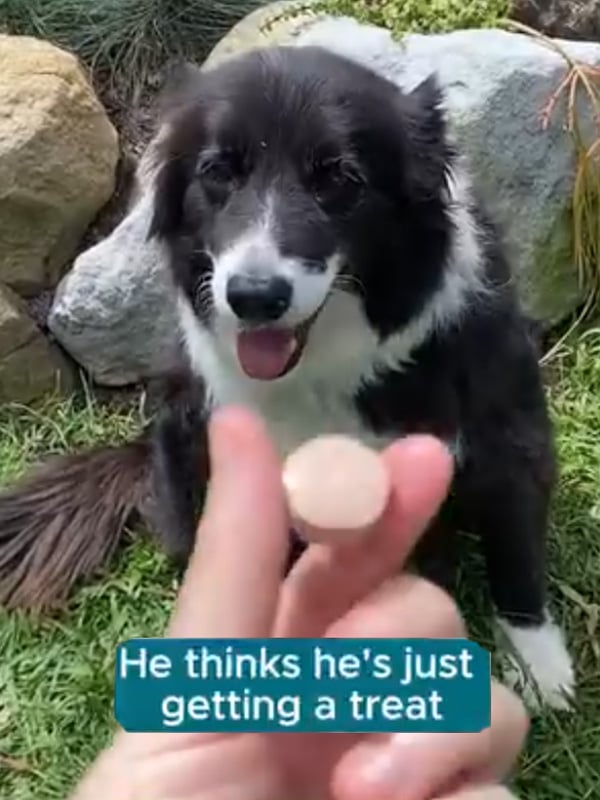

You're walking your dog down the street when they suddenly stop. Their ears go back, their tail drops, and they refuse to take another step.
There's no obvious danger. Just a person walking past, a familiar street or perhaps a noise you barely noticed.
But what if your dog noticed something you didn't? Could they be remembering something frightening that happened a long time ago?
Dogs don't experience memories exactly the way humans do. However, research suggests they can remember experiences, learn powerful associations and recognize situations connected to fear.
And sometimes, those memories may influence their behavior long after the original experience.
Do Dogs Actually Remember Bad Experiences?
Yes, dogs can retain memories and learned associations connected to unpleasant experiences.
Imagine a dog that once slipped on a slippery floor. Even after recovering, they might hesitate before walking across a similar surface.
Or a dog that experienced a frightening thunderstorm might become nervous when the sky darkens or the wind picks up.
These reactions don't necessarily mean your dog is consciously replaying a detailed memory of what happened.
Instead, their brain may have learned that certain sounds, places, smells or situations predict something unpleasant.
That association can influence how they respond in the future.
Can Dogs Remember Something That Happened Years Ago?
It's possible for learned fears and associations to persist for long periods, especially when they are repeatedly reinforced.
However, researchers can't tell us exactly how long an individual dog remembers a particular frightening event.
Memory depends on several factors, including:
- How intense or frightening the original experience was.
- Whether something similar happened repeatedly.
- The dog's age, temperament and previous experiences.
- Whether the dog has since had positive experiences in similar situations.
- How often the dog encounters reminders of the event.
For example, a dog that was frightened by fireworks one summer might react nervously when hearing similar explosive sounds months later.
That doesn't prove they remember the exact date or event. It does suggest that the sound has acquired an emotional meaning.
Here's the Surprising Part: Dogs Don't Need to Remember Every Detail
Think about something that makes you uncomfortable. Sometimes, a familiar sound or smell can trigger a feeling before you've even worked out why.
Dogs can also develop emotional associations with environmental cues.
Through a process called classical conditioning, something that was previously neutral can become connected with a frightening experience.
For example:
- A loud noise during a veterinary visit could contribute to anxiety around similar sounds or settings.
- An unpleasant encounter with another dog could make future dog interactions feel threatening.
- A frightening experience in a car could create hesitation around getting into vehicles.
- A sudden fall on a particular surface could lead to avoidance of similar flooring.
Sometimes, the trigger isn't the event itself. It's something that happened just before it.
That's why your dog might react to an ordinary object, location or sound that seems completely harmless to you.
Do Rescue Dogs Remember Being Mistreated?
This is a question many rescue dog owners ask, especially when their dog seems frightened of particular people, movements or situations.
A dog with a history of mistreatment may develop learned fear responses that continue after entering a safe home.
However, fearful behavior alone doesn't prove a dog was abused.
Some dogs are naturally more cautious. Others may have experienced limited socialization, stressful environments, painful medical conditions or frightening events unrelated to mistreatment.
For example, a dog that flinches when someone raises a hand might have learned to associate that movement with something unpleasant. But without knowing their history, it's impossible to say exactly why.
What matters most is understanding their current behavior and helping them feel secure.
Can Dogs Remember People Who Frightened Them?
Dogs can recognize familiar people using information such as scent, voice, appearance and previous interactions.
If a particular person has consistently been associated with frightening experiences, a dog may react cautiously when encountering them again.
But dogs can also generalize fear.
That means a dog frightened by one person might become nervous around other people who share certain characteristics, such as similar clothing, movements or voices.
This doesn't mean the dog believes those people are the same individual. Instead, certain familiar cues may have become associated with danger.
Understanding this distinction is important because it helps owners respond with patience rather than assuming their dog is being difficult.
What Are the Signs Your Dog Is Remembering Something Frightening?
Dogs can't explain what they're feeling, but their body language can tell us when they're uncomfortable.
Possible signs include:
- Freezing or suddenly refusing to move.
- Tucking their tail or lowering their body.
- Turning away or trying to escape.
- Yawning, lip licking or showing the whites of their eyes in a stressful context.
- Shaking or trembling.
- Hiding behind their owner.
- Growling, barking or lunging when they feel threatened.
- Refusing treats they would normally enjoy.
These behaviors can indicate fear or stress, but they don't identify the cause or prove that a specific memory has been triggered.
Sudden behavioral changes can also indicate pain or illness, so it's worth speaking with your veterinarian if something seems unusual.
Can You Help Your Dog Replace a Bad Association With a Good One?
Here's the encouraging part: dogs can learn new associations, even after developing strong fears.
Two approaches commonly used in behavior modification are desensitization and counterconditioning.
Desensitization involves introducing a trigger at a very low intensity, where the dog remains comfortable, and gradually increasing exposure over time.
Counterconditioning involves pairing that trigger with something positive, such as a favorite treat, to help change the dog's emotional response.
For example, if your dog is nervous around visitors, you might begin by rewarding calm behavior when a person is visible at a comfortable distance.
The goal isn't to force your dog to approach someone. It's to help them feel safer while learning that the situation predicts good things.
For more serious fears, work with your veterinarian or a qualified, reward-based behavior professional. Exposure that's too intense can make fear worse.
What Should You Avoid Doing With a Fearful Dog?
When your dog seems scared of something harmless, it can be tempting to encourage them to face it immediately.
But forcing interactions may increase their fear.
Avoid:
- Dragging your dog toward something they're afraid of.
- Punishing growling, hiding or other fear-related behavior.
- Flooding them with intense exposure in the hope they'll get used to it.
- Allowing unfamiliar people to crowd or corner them.
- Ignoring sudden changes that could be related to pain.
Instead, give your dog space, reduce the intensity of the trigger and reward voluntary, relaxed behavior.
It's also okay to comfort a frightened dog. Calm reassurance doesn't automatically reinforce fear.
Can Positive Memories Last Just as Long?
Thankfully, dogs don't only form associations with unpleasant experiences.
They also learn to recognize people, places and routines connected with comfort, excitement and rewards.
Think about how your dog reacts when you pick up their leash, open the treat cupboard or reach for their favorite toy.
Those reactions are often built through repeated positive experiences.
And that gives owners an important opportunity: creating predictable, rewarding routines can help build confidence and trust.
Simple activities such as reward-based training, gentle play, sniffing walks and appropriate food puzzles can provide positive experiences while strengthening your relationship.
When Should You Ask for Professional Help?
Occasional nervousness doesn't always indicate a serious behavioral problem.
However, veterinary guidance is important if your dog:
- Shows sudden or unexplained fear.
- Becomes increasingly anxious over time.
- Panics during everyday activities.
- Shows defensive aggression or attempts to bite.
- Cannot relax or recover after a frightening experience.
- Has fear that interferes with walks, eating, sleeping or normal routines.
Your veterinarian can check for underlying medical causes and recommend an appropriate behavior plan or specialist referral.
Summary
So, does your dog remember the bad things that happened to them?
They may not remember every detail the way you do, but frightening experiences can leave lasting associations that influence how they feel and behave.
That unexpected reaction to a sound, place or person might be connected to something they've learned in the past. But it could also have another explanation, including pain, temperament or limited socialization.
The most important thing isn't discovering exactly what happened years ago. It's recognizing how your dog feels today and helping them build safer, more positive experiences for tomorrow.
Because while you can't change their past, you can help shape what they learn next.