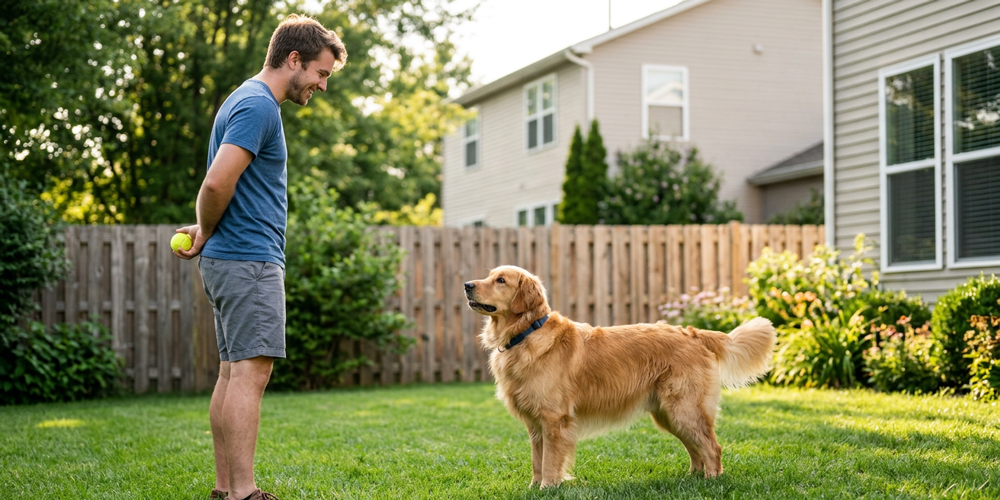
You pretend to throw the ball.
Your dog takes off across the yard at full speed while the ball is still sitting in your hand.
For approximately three seconds, you feel like a genius.
Then your dog turns around, looks at the empty yard, looks at you, and somehow gives you a stare that says, "Seriously?"
Try it again and you might discover something interesting: your trick isn't nearly as convincing the second time.
We spend a lot of time trying to understand our dogs. We learn what different barks mean, recognize the look that says they need to go outside and somehow know the difference between their "I'm hungry" stare and their "I dropped my toy behind the couch" stare.
But while you've been learning to read your dog, your dog has been learning to read you too.
And they may know much more about you than you realize.
So, Can You Actually Fool Your Dog?
Sometimes, absolutely.
The fake ball throw has fooled plenty of enthusiastic dogs. Hiding a treat in one hand can leave a curious nose investigating both fists. And spelling W-A-L-K might buy you some time before your dog figures out what those letters predict.
But dogs don't need to understand deception in exactly the same way humans do to realize when something doesn't add up.
They're constantly gathering information from us. Where we're looking. How we're standing. What our hands are doing. The tone of our voice. What normally happens next.
If your actions repeatedly stop matching what your dog expects, they can learn from that too.
In other words, you might fool them once. But don't assume they aren't taking notes.
Does Your Dog Watch Your Face?
Think about the last time you looked toward your dog's leash.
You may not have touched it. You may not have said anything. But suddenly, there's a dog standing beside you ready to go.
Coincidence?
Dogs are remarkably tuned in to human visual cues. They can use things like our gaze, gestures and body orientation to gather information about what we're paying attention to and what might happen next.
That's one reason pointing can work so well with dogs. You aren't physically moving them toward something. You're giving them information with your body, and many dogs learn how to use it.
The fascinating part is that we're often communicating with them without realizing we're doing it.
You may think your dog somehow "just knows." In reality, you might have already told them with your eyes, hands or body.
What About Your Voice?
Try saying, "Do you want a treat?" in the same voice you'd use to announce that you're taking the trash outside.
It feels wrong, doesn't it?
Your dog doesn't only hear individual words. The way you say them matters too.
Dogs can become familiar with specific words and phrases, but they also pay attention to tone, excitement and other vocal cues.
That's why you can sometimes say complete nonsense in your happiest, most enthusiastic voice and still get a wagging tail.
On the other hand, saying something exciting in an unusually flat tone may produce a very different response.
To your dog, how you sound can provide information alongside what you're actually saying.
Do They Know When You Have a Treat?
You quietly take a treat from the bag.
You put it behind your back.
You haven't said anything.
Yet somehow your dog is staring directly at the hand holding it.
Before assuming they're psychic, remember what you're dealing with: an animal with an extraordinary sense of smell that also happens to spend a significant amount of time watching you.
They may smell the food. They may have heard the bag. They may recognize the movement you make when reaching for a treat. Or they've learned that you standing beside a particular cabinet usually ends very well for them.
Dogs are excellent at learning associations.
If you'd like to put that enthusiasm to better use, reward-based games and training can turn your dog's obsession with snacks into mental stimulation. Small dog treats can be useful for rewarding desired behaviors, provided treats remain an appropriate part of their overall diet.
Can Your Dog Tell Where You're Looking?
Here's something to try.
Put one of your dog's toys somewhere in the room. Don't point at it or say its name. Just look toward it.
What happens?
Some dogs are much better at following human gaze than others, but dogs can use our attention as a clue.
And that can work the other way too.
Your dog may behave differently depending on whether they think you're watching.
That doesn't necessarily mean they're plotting behind your back. It means they've learned that your attention can change what happens next.
Which may explain why stealing a sock becomes approximately 400% more exciting the moment you notice.
Does Your Dog Know When You're Pretending to Throw the Ball?
Ah, the classic betrayal.
You swing your arm. Your dog launches forward. The ball never leaves your hand.
Dogs can initially respond to the throwing motion because it's a familiar cue that predicts something exciting flying through the air.
But once the expected ball doesn't appear, your dog receives new information.
Repeat the trick enough and some dogs start paying closer attention. Instead of immediately sprinting away, they may watch your hand, search near you or simply refuse to fall for it again.
They haven't necessarily decided, "My human is deliberately deceiving me."
They've learned something much simpler and incredibly useful:
That movement doesn't always mean the ball was thrown.
For actual games of fetch, you can probably restore your reputation with a KONG Ball Dog Toy.
Can They Tell What You're About to Do?
This might be the strangest part of living with a dog.
Sometimes it feels like they know what you're doing before you've even done it.
You haven't said "walk," but they're excited.
You haven't picked up the car keys, but they're waiting at the door.
You haven't announced bedtime, but they've already disappeared toward the bedroom.
Dogs are incredibly good at learning routines and associations.
You might unknowingly perform dozens of tiny actions before something happens. Maybe you put on different shoes before a walk. Turn off a particular light before bed. Pick up your phone before grabbing the leash. Move toward one part of the kitchen before preparing their dinner.
Individually, those details seem meaningless.
To a dog who has watched the same sequence hundreds of times, they're clues.
So when it seems like your dog can predict the future, there's a good chance they've simply become an expert in you.
Can You Fool Their Nose?
This is where humans are seriously outmatched.
You can hide something visually, but that doesn't mean you've hidden it from your dog.
Dogs experience an enormous amount of their world through scent. That means hiding a treat under a cup, behind your back or somewhere around the house can be a very different challenge for them than it would be for us.
Rather than fighting that superpower, you can use it.
Hide-and-seek games involving food or toys can encourage dogs to sniff, search and problem-solve. Puzzle toys can provide another way to turn that problem-solving ability into enrichment.
Does Your Dog Know When You're Happy or Upset?
You've probably experienced this one.
You're having a terrible day and your dog seems unusually quiet around you. Or you're excited and suddenly they're bouncing around too.
Dogs have access to several clues about our emotional state. They can observe facial expressions, posture, movement and changes in our voices, and may respond differently depending on the signals we're giving them.
That doesn't mean your dog understands every complicated human emotion or knows exactly why you're upset.
But they don't need to understand the argument you had at work to recognize that you're acting differently from normal.
Once again, they're noticing change.
Are You Accidentally Giving the Game Away?
Imagine putting a treat in one of two cups and asking your dog to find it.
You know exactly which cup it's under.
You promise yourself you won't help.
But maybe you glance at the correct cup for half a second. Angle your body toward it. Pause slightly when your dog approaches it. Change your expression when they're about to choose correctly.
You may think you're giving nothing away.
Your dog may disagree.
This is one of the most fascinating things about communicating with dogs: we can influence them without consciously intending to.
It's worth remembering during training too. Consistent cues and rewards can make it much easier for your dog to understand what you're actually asking them to do.
Want to Find Out How Closely Your Dog Is Watching?
Try a few harmless experiments at home.
- Look toward their favorite toy without pointing at it.
- Pick up the leash without saying "walk" and see how quickly they react.
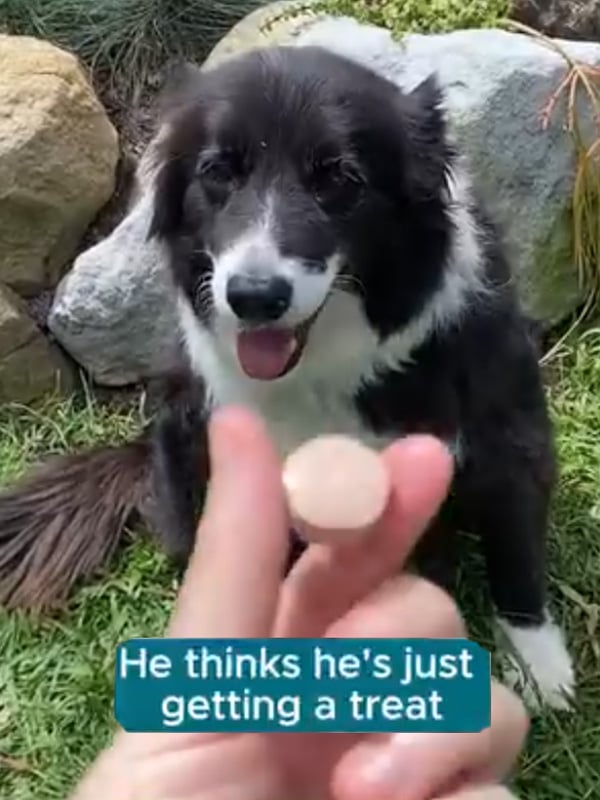
- Hide a treat in one hand and let them investigate.
- Place a treat inside a simple puzzle and watch how they solve it.
- Change one small part of a familiar routine and see whether they notice.
Keep it fun. The goal isn't to frustrate or confuse your dog. It's simply to notice how much information they're gathering from you all the time.
You might be surprised by what they pick up on.
Summary
So, can you fool your dog?
Sure. Sometimes.
But while you're congratulating yourself on that fake throw, remember that your dog has spent months or years studying your voice, movements, routines, expressions and habits.
They know which cupboard contains the treats. They recognize the movements that happen before a walk. They notice where you're looking. They learn which words matter. And they may pick up on tiny changes in your behavior that you don't even realize you're making.
You might know your dog incredibly well. But there's a pretty good chance they know you incredibly well too.