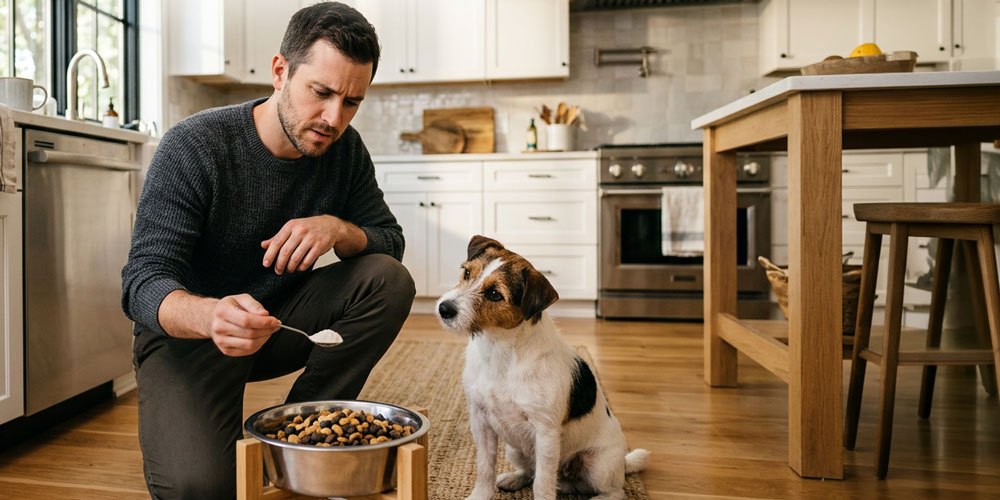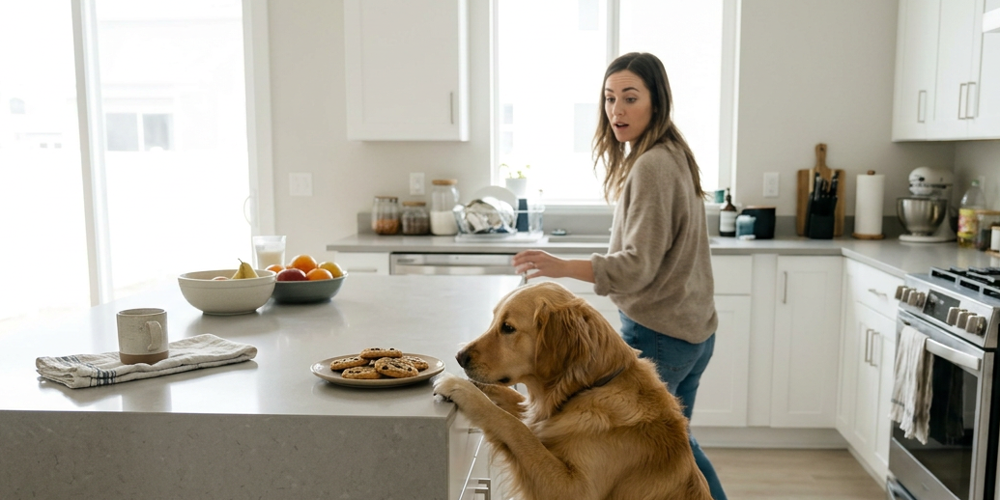
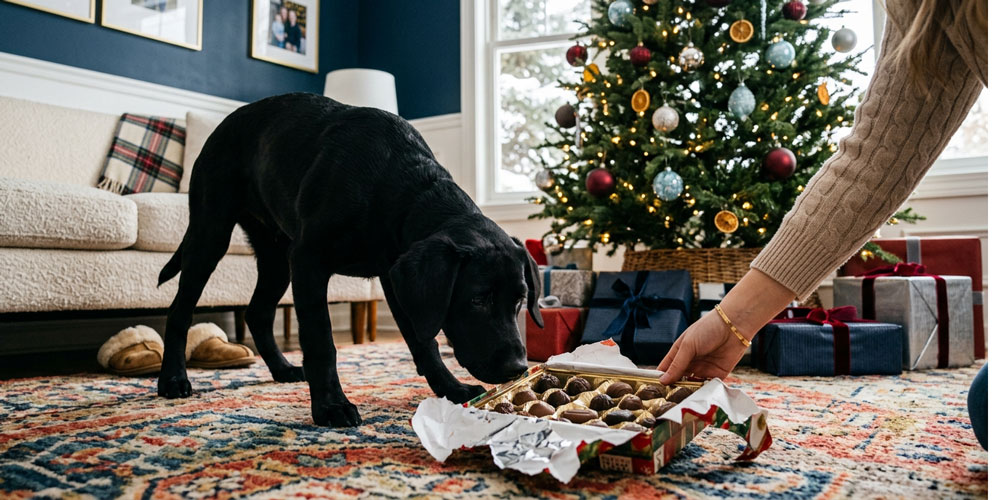
Christmas dinner is finally on the table. There's roast turkey, potatoes, stuffing, desserts and enough delicious smells to attract every dog in the house.
And somewhere nearby, your dog is watching every bite with those irresistible puppy eyes.
Surely one little taste won't hurt?
Well, that depends on what's on your plate.
Some Christmas foods can be genuinely dangerous for dogs, while others are perfectly fine to share when prepared correctly. The tricky part is knowing the difference.
Before you slip your dog something from the Christmas table, here are five festive foods to keep well out of reach, plus some safer alternatives that let your pup enjoy the celebrations too.
1. Christmas Chocolate: A Sweet Treat With a Serious Risk
Chocolate is everywhere at Christmas. From boxes of chocolates and homemade brownies to chocolate-covered cookies and holiday desserts, it's one of the easiest festive foods for a curious dog to find.
Unfortunately, chocolate contains substances called theobromine and caffeine, which dogs cannot process as efficiently as humans.
The risk depends on the type of chocolate, the amount eaten and your dog's size.
Dark chocolate and baking chocolate are especially dangerous because they generally contain higher concentrations of theobromine.
Possible signs of chocolate poisoning include:
- Vomiting or diarrhea.
- Restlessness and unusual excitement.
- Increased heart rate.
- Tremors.
- Seizures in severe cases.
Even white chocolate, which contains very little theobromine, isn't a good choice because its fat and sugar content can cause digestive problems.
What's safe instead?
Offer an appropriately sized dog treat rather than sharing chocolate. A dog-specific treat such as Greenies Dog Blueberry Dental Treats can be a more suitable option when used according to the label and your dog's dietary needs.
Keep chocolate decorations, wrapped chocolates and dessert plates somewhere your dog cannot access them.
2. Christmas Cake, Fruitcake and Raisins: Small Ingredients, Big Problems
Christmas cake, fruitcake, mince pies and some festive cookies often contain dried fruit.
And that's where the danger comes in.
Grapes, raisins, sultanas and currants made from grapes can cause serious kidney injury in dogs.
What's particularly concerning is that the toxic amount can vary between dogs. There isn't a reliably safe number of raisins or grapes to share.
That means even a small amount deserves immediate veterinary advice.
Be especially careful with:
- Christmas fruitcake.
- Raisin bread.
- Mince pies containing raisins or currants.
- Trail mixes with dried grapes.
- Holiday cookies containing raisins.
Some festive baked goods may also contain chocolate, alcohol or other potentially harmful ingredients.
What's safe instead?
Try a few small pieces of plain apple with the core and seeds removed, or a little fresh blueberry, provided your dog tolerates them.
Introduce unfamiliar foods in small amounts, and remember that even healthy extras contribute to your dog's daily calorie intake.
3. Christmas Stuffing and Gravy: The Hidden Onion and Garlic Problem
Stuffing and gravy might seem harmless compared with chocolate, but their ingredients can make them unsuitable for dogs.
Many Christmas recipes contain onion, garlic, shallots or other members of the Allium family.
These ingredients can damage a dog's red blood cells and potentially cause anemia.
And here's something many owners don't realize: onion and garlic can still be harmful when cooked, dried or powdered.
That means the risk isn't limited to visible pieces of onion.
Onion powder in seasoning mixes, garlic in stuffing and concentrated ingredients in gravy can all be problematic.
Signs of toxicity may include:
- Vomiting or digestive upset.
- Weakness and lethargy.
- Pale gums.
- Rapid breathing.
- Dark or reddish urine.
Some signs can take several days to develop, so don't wait for symptoms if you know your dog has eaten a concerning amount.
What's safe instead?
Set aside a small portion of plain, fully cooked turkey or chicken before adding seasoning, onions, garlic, gravy or stuffing.
Remove the skin, bones and excess fat, and serve only a small amount.
4. Cooked Turkey Bones: The Leftover You Should Never Share
After Christmas dinner, it can be tempting to give your dog a leftover turkey bone.
After all, dogs love chewing, right?
But cooked poultry bones can splinter or break into sharp pieces, creating a risk of choking, injury or gastrointestinal obstruction.
Even bones that don't visibly splinter can become lodged or cause digestive complications.
Never give your dog cooked turkey or chicken bones.
Be particularly careful when clearing the Christmas table. Dogs may find discarded bones in trash bags, on plates or underneath the dining table.
What's safe instead?
Offer a suitable chew toy that satisfies your dog's urge to chew without the risks associated with cooked bones.
For example, the KONG Classic Red Dog Toy can be filled with some of your dog's regular kibble or a small amount of suitable dog-safe food.
Always select the correct toy size, supervise chewing and remove damaged toys.
If your dog swallows a cooked bone, contact your veterinarian for advice rather than trying to make them vomit.
5. Christmas Ham and Fatty Leftovers: Too Rich for Your Dog
That glazed Christmas ham might smell incredible, but it's not a great choice for your dog.
Ham is often high in sodium, and fatty cuts, turkey skin, rich sauces and buttery leftovers can cause digestive upset.
In some dogs, eating a large amount of fatty food can contribute to pancreatitis, a potentially serious inflammation of the pancreas.
Signs can include:
- Repeated vomiting.
- Loss of appetite.
- Abdominal pain.
- Lethargy.
- Diarrhea.
Glazes and sauces may also contain ingredients such as onion, garlic or other seasonings that make them unsuitable for dogs.
What's safe instead?
A small amount of plain, lean, fully cooked turkey or chicken without bones, skin, seasoning or sauce is generally a better option for a healthy dog.
For dogs with pancreatitis, food sensitivities or other medical conditions, stick to their veterinarian-approved diet.
So, What Christmas Foods Can Dogs Actually Eat?
Now for the good news!
Your dog doesn't have to miss out on every festive treat. There are several foods you might already be preparing that can be suitable when served plain and in small amounts.
Here are some options:
- Plain cooked turkey: Fully cooked, boneless, skinless and unseasoned.
- Plain cooked chicken: Without bones, skin, sauces or seasoning.
- Carrots: Raw or cooked without butter, salt or seasoning, cut into manageable pieces.
- Green beans: Plain, cooked or raw, without added ingredients.
- Sweet potato: Fully cooked and plain, without sugar, butter or marshmallow topping.
- Pumpkin: Plain cooked pumpkin or pure pumpkin puree, not sweetened pumpkin pie filling.
- Apple: Fresh, in small pieces, with the core and seeds removed.
Even safe foods can cause stomach upset if your dog eats too much or isn't accustomed to them.
As a general guideline, treats and extras should make up no more than about 10% of your dog's daily calories, unless your veterinarian advises otherwise.
The rest should come from a complete and balanced diet.
What About Peanut Butter?
Peanut butter is a popular ingredient in homemade dog treats, but not every jar is suitable.
Some products contain xylitol, a sweetener that is highly toxic to dogs. It may also appear on ingredient labels as birch sugar.
Xylitol can cause a dangerous drop in blood sugar and potentially liver damage.
Always check the ingredients before sharing peanut butter with your dog.
Choose a xylitol-free option without unnecessary added sugar or salt, and serve only a small amount.
You can also use a suitable food-dispensing toy such as the KONG Wobbler Dog Toy with part of your dog's regular kibble to provide an enjoyable activity while everyone else is eating Christmas dinner.
How to Make a Dog-Friendly Christmas Dinner
Want your dog to feel included without sharing risky table scraps?
Try making a small festive meal using ingredients you already know they tolerate.
A simple dog-friendly Christmas plate might include:
- A measured portion of their regular complete and balanced dog food.
- A few small pieces of plain cooked turkey.
- A spoonful of plain cooked pumpkin or sweet potato.
- A couple of soft, bite-sized carrot pieces.
Keep the extras modest, especially for small dogs.
If your dog has a sensitive stomach or follows a prescription diet, it's better to skip the extras and serve their usual meal.
And remember, your dog doesn't know whether their dinner is fancy. They'll probably be just as excited about a familiar meal served in a different way.
The Christmas Food Danger Most Owners Forget: The Trash
It's not always the food on the table that causes trouble.
After Christmas dinner, the trash can become one of the most tempting places in the house.
Think about what's inside:
- Turkey bones and fatty scraps.
- Chocolate wrappers.
- Used foil and food packaging.
- Leftover stuffing and gravy.
- Fruitcake crumbs.
- Discarded corn cobs or other food waste.
Even a dog that normally ignores the trash might investigate when it's full of unfamiliar holiday smells.
Use a secure trash can, clear plates promptly and remind guests not to feed your dog without checking with you first.
What Should You Do If Your Dog Eats Something Dangerous?
If you suspect your dog has eaten chocolate, raisins, grapes, xylitol or another potentially toxic food, contact your veterinarian or an animal poison control service immediately.
Don't wait for symptoms to appear.
In the United States, you can contact:
- ASPCA Animal Poison Control Center: (888) 426-4435.
- Pet Poison Helpline: (855) 764-7661.
Consultation fees may apply.
Be ready to explain what your dog ate, approximately how much, when it happened and your dog's weight.
Do not induce vomiting or give home remedies unless specifically instructed by a veterinary professional.
If your dog is having seizures, collapsing, struggling to breathe or showing other severe symptoms, seek emergency veterinary care immediately.
Summary
Christmas should be a time for good food, family and a little extra fun with your pets, not an unexpected trip to the emergency veterinarian.
Chocolate, dried grapes, onion- and garlic-containing dishes, cooked poultry bones and rich fatty leftovers are all foods worth keeping away from your dog.
Fortunately, there are still plenty of ways to include them in the celebrations.
A little plain cooked turkey, some dog-safe vegetables or an appropriate enrichment toy can make Christmas feel special without taking unnecessary risks.
So when those puppy eyes appear beside the Christmas table, you'll know exactly what you can share and what should stay on your plate.