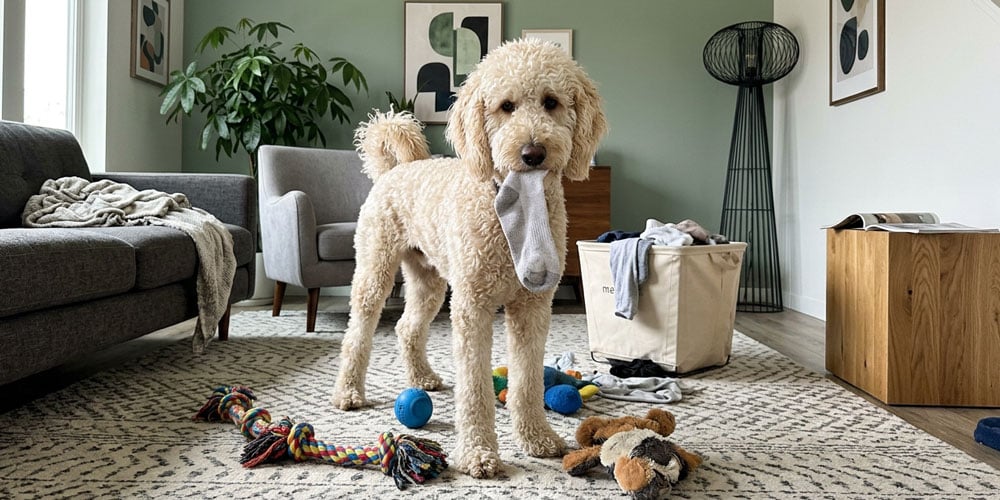
Your dog gets their daily walk, has a basket full of toys and receives plenty of attention. So surely they can't be bored... right?
Not necessarily.
Here's something many dog owners don't realize: a dog can have everything they need physically and still be missing something mentally.
And boredom doesn't always look like chewed furniture or a backyard full of holes. Sometimes, the signs are so ordinary that we mistake them for bad habits, laziness or simply our dog's personality.
So, could your dog be bored without you even noticing?
1. Your Dog Follows You Everywhere, Even When Nothing Is Happening
You're walking to the kitchen. Your dog follows. You head to the bathroom. They're right behind you. You stand up to grab your phone, and suddenly they're on their feet again.
Sound familiar?
Dogs naturally enjoy being close to their people, so following you around isn't automatically a problem.
But if your dog constantly seeks your attention and struggles to settle when nothing interesting is happening, they may need more opportunities for independent activities.
Try offering a food puzzle, an appropriate chew or a short scent game that gives them something enjoyable to focus on without needing you to entertain them constantly.
2. They Keep Bringing You Toys, but Don't Actually Want to Play
Your dog drops a toy at your feet. You throw it. They chase it once, bring it back and then lose interest.
Five minutes later, they're bothering you again.
Sometimes, dogs aren't asking for the same game over and over. They may be looking for a different type of stimulation.
Think about how repetitive it would feel to play the exact same game every day.
Dogs benefit from variety, especially activities that encourage sniffing, problem-solving and exploring.
Instead of another round of fetch, try hiding a favorite toy somewhere easy and encouraging your dog to find it.
3. Your Dog Seems Restless Even After a Walk
You've just returned from a long walk, but your dog is pacing around the living room, wandering between rooms or repeatedly asking to go outside.
How can they still have energy?
One possibility is that their walk provided physical activity without enough mental engagement.
For dogs, sniffing is an important way of exploring their environment. A walk that allows them to investigate interesting smells can provide a different experience from one focused entirely on covering distance.
Try giving your dog a few opportunities to stop and sniff during your next walk.
Of course, persistent restlessness can also be linked to stress, discomfort or medical problems. If it's new or unusual, speak with your veterinarian.
4. They're Suddenly Interested in Everything They're Not Supposed to Touch
The remote control. Your favorite shoes. The corner of a cushion.
Why do these things suddenly become so interesting when your dog has perfectly good toys?
Sometimes, dogs investigate or chew inappropriate objects because they need an outlet for natural behaviors.
Chewing, exploring and manipulating objects are normal canine activities.
But destructive behavior can also result from separation-related distress, teething, anxiety or other causes.
Rather than assuming your dog is being naughty, consider what happened before the behavior and whether they have appropriate alternatives.
For dogs who enjoy chewing and working for food, a KONG Classic Red Dog Toy can be stuffed with a portion of their regular kibble or suitable treats to create a more engaging activity.
Always choose the correct size and supervise play, particularly when introducing a new toy.
5. Your Dog Sleeps All Day, but Becomes Wild at Night
Your dog spends much of the afternoon sleeping peacefully. Then, just as you're ready to relax, they suddenly have endless energy.
They're running around, grabbing toys and demanding attention.
Sometimes, this reflects a daily routine that doesn't provide enough opportunities for activity and engagement during waking hours.
But sleeping for long periods is also normal for dogs, and evening excitement doesn't automatically mean they're bored.
Age, breed, health and individual temperament all influence sleep and activity patterns.
Try adding a short training session, sniffing game or interactive activity earlier in the day and see whether it helps create a more balanced routine.
6. They're Licking, Chewing or Repeating the Same Behavior
Some dogs repeatedly lick their paws, chase their tails or perform other repetitive behaviors.
It's tempting to assume they're doing it because they have nothing better to do.
However, repetitive behavior shouldn't automatically be dismissed as boredom.
Excessive licking may be linked to allergies, pain, skin problems or anxiety. Repetitive movements can also have medical or behavioral causes.
If your dog is licking until their skin becomes irritated, repeatedly performing the same movement or seems unable to stop, arrange a veterinary examination.
Enrichment can support well-being, but it isn't a substitute for investigating an underlying problem.
7. Their Favorite Toys Don't Seem Exciting Anymore
Remember that toy your dog absolutely loved when you first brought it home?
Now it sits untouched at the bottom of the basket.
Dogs can become less interested in familiar activities, particularly when the experience rarely changes.
That doesn't necessarily mean you need to buy more toys.
Try rotating a small selection instead.
Keep a few toys available, put the others away and swap them regularly. You can also change how you use familiar toys.
For example, a KONG Wobbler Dog Toy dispenses food when nudged, allowing your dog to use their nose and paws to work for part of their meal.
However, a sudden loss of interest in favorite activities can also indicate illness or pain, especially when accompanied by changes in appetite, energy or behavior.
8. More Exercise Isn't Always the Answer
Here's one of the biggest misconceptions about bored dogs: if they're restless, they must need a longer walk.
Physical exercise is important, but it isn't the only form of enrichment.
Dogs also benefit from opportunities to use their senses, make choices, learn and engage in natural behaviors.
And the best activities aren't necessarily the most exhausting ones.
Depending on your dog's preferences, try:
- Sniffing walks: Let your dog investigate interesting scents at their own pace.
- Food puzzles: Encourage problem-solving using part of their normal food allowance.
- Short training sessions: Practice a familiar skill or introduce something new using rewards.
- Find-it games: Hide a few pieces of kibble in safe, accessible locations.
- Appropriate chewing: Provide a safe outlet for natural chewing behavior.
- Interactive play: Try tug, fetch or searching for a favorite toy.
The goal isn't to keep your dog busy every second. It's to provide a healthy balance of activity, mental engagement and rest.
9. Try This Five-Minute Boredom Test
Wondering whether your dog would benefit from more mental stimulation?
Try a simple enrichment activity and observe how they respond.
Minute 1: Choose a quiet, familiar space and gather a small portion of your dog's regular kibble.
Minute 2: Let your dog watch as you scatter a few pieces across a clean, safe area.
Minutes 3-4: Encourage them to search using their nose. Keep the game easy and enjoyable.
Minute 5: Allow your dog to finish, then observe whether they seem satisfied and ready to relax.
This isn't a scientific test or a way to diagnose boredom. But it can help you discover whether your dog enjoys scent-based activities and might benefit from more opportunities to explore.
Some dogs love searching for food. Others prefer chewing, training or playing with their owners.
Finding the right activity matters more than choosing the most complicated one.
10. What If Your Dog Is Bored While You're at Work?
If your dog spends part of the day home alone, a little preparation can help make that time more comfortable.
Before leaving, consider offering an appropriate walk, bathroom break or short enrichment activity.
For dogs that can safely use food-dispensing toys without supervision, a familiar enrichment toy may provide an activity during part of their alone time.
However, not every toy is safe to leave with every dog. Consider chewing habits, toy condition and the risk of swallowing pieces.
It's also important to distinguish boredom from separation-related distress.
A dog that panics, howls continuously, attempts to escape or becomes highly distressed when left alone may need behavioral support rather than simply another toy.
Speak with your veterinarian if you suspect separation anxiety.
How Much Mental Stimulation Does Your Dog Actually Need?
There's no universal number of minutes that works for every dog.
A young, energetic working breed may enjoy different activities from an older dog who prefers gentle sniffing walks and relaxed play.
Your dog's needs depend on their age, health, personality, breed tendencies and daily routine.
Instead of aiming for a specific number of activities, look for a healthy balance:
- Regular physical activity appropriate for their health.
- Opportunities to sniff, explore and make choices.
- Enjoyable mental challenges.
- Positive interaction with people or other animals, when appropriate.
- Plenty of uninterrupted rest.
And remember, a dog who is relaxed and sleeping peacefully isn't necessarily bored. Being able to settle is a good thing.
Summary
So, could your dog be bored without you realizing it?
Possibly. But the signs aren't always as obvious as destroyed furniture or nonstop barking.
Restlessness, attention-seeking behavior, repeated attempts to find entertainment and a lack of interest in familiar activities can sometimes suggest your dog needs more variety or mental engagement.
However, these behaviors can also have other explanations, including anxiety, pain and medical conditions.
The biggest takeaway is that keeping your dog entertained isn't just about longer walks or buying more toys.
Sometimes, a few minutes of sniffing, a simple food puzzle or a new way to play can make an ordinary day much more interesting.
And the best part? You might discover that your dog enjoys the simplest activities most of all.