There are ticks all over the United States that are a problem for dogs (and for humans as well). These blood-sucking pests become more prevalent as temperatures rise and you and your dog spend more time outside. In tall grasses and shrubs, ticks wait for your dog to walk by so they can attach themselves.
Many deadly diseases are transmitted by ticks, and some of them are currently incurable. Therefore, being diligent in checking for and removing ticks is critical whilst always making sure your pet's flea and tick preventative is up to date.
Why Tick Checks Matter
Ticks are more than just a nuisance. These tiny parasites can transmit serious diseases to both dogs and humans. The sooner a tick is found and removed, the lower the risk of disease transmission. That's why regular tick checks are one of the simplest ways to help protect your dog, especially during warmer months or after spending time outdoors.
Even if your dog is protected with products such as Simparica Trio or Bravecto, regular inspections remain an important part of parasite prevention.
It can be difficult to find ticks on your dog, so here are seven common places to look first:
1. Head and Ears
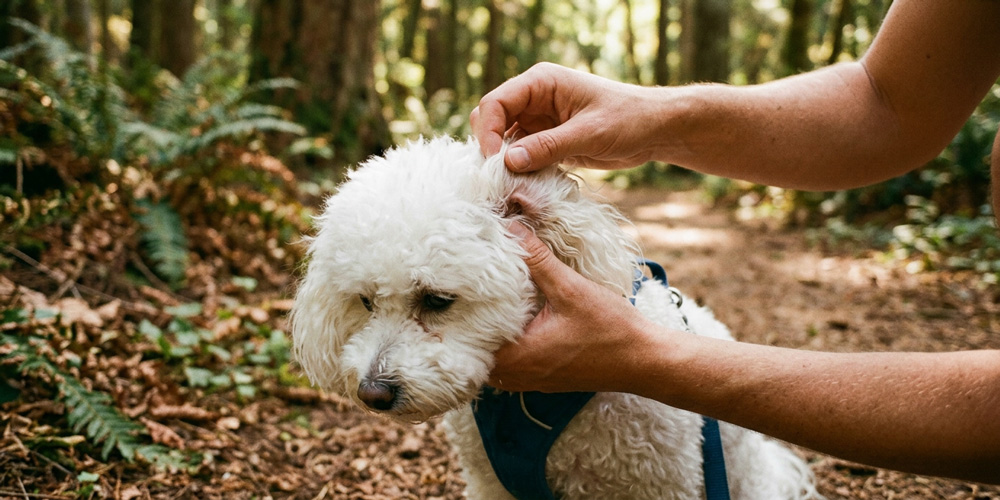
Because dogs are curious creatures, they stick their heads into everything, so it's quite common for ticks to find their way onto a dog's head or into their ears. With so many crevices and places to hide, the ears are an ideal place for a hungry tick to attach.
Make sure you check your dog's ears on the outside as well as deep within the ear, because ticks can attach and go unnoticed for a long time. It's a sure sign that something is wrong if your dog shakes their head or scratches at their ears continuously.
2. Under the Collar
Many dogs rarely have their collars removed, making this area the perfect spot for ticks to go unnoticed. Usually, ticks in this area will get to the point where they are so large they can be easily seen. Unfortunately, this means they have been feeding for a while.
Removing your dog's collar and doing a thorough check every few days, especially during summer, is always a good idea. Just remember to put it back on afterwards.
3. Eyelids
Ticks near the eyelids often remain unnoticed because they are mistaken for skin tags or eye discharge. By the time owners realise there is a tick on their dog's eyelid, it may have already been present for quite some time.
The longer a tick remains attached, the greater the risk of disease transmission.
4. Armpits
Ticks can also attach high up in the armpit area, where the front legs meet the body. The area is dark, warm, and difficult for dogs to reach or for owners to easily inspect.
Run your fingers through the fur and check carefully after outdoor adventures.
5. Groin
Many dog owners aren't enthusiastic about checking the genital regions of their dogs, and we can't blame them. However, this uncomfortable area is a lovely dark and warm location that ticks love.
Ticks in this area stay hidden by the dog's coat and tail and often remain attached for long periods, increasing the risk of disease transmission. Whilst it may not be your favourite inspection point, it's an important one, especially during warmer months.
6. Tail
In most cases, ticks remain unnoticed on dogs' tails because owners don't check the underside, especially near the base.
You'll want to comb through any thick, dense fur on your dog's tail. Be gentle, as many dogs don't enjoy having their tail handled. A fine-toothed comb can often help reveal attached ticks hiding in the fur.
7. Toes
If you notice your dog chewing, licking, or sniffing their feet, there might be something bothering them, and that something could be a tick.
Ticks often crawl between the toes or even attach near the paw pads, making them surprisingly easy to miss.
What To Do If You Find A Tick
If you discover a tick attached to your dog, remove it as soon as possible using a tick removal tool or fine-tipped tweezers. Grasp the tick close to the skin and pull steadily upward without twisting.
Avoid squeezing the body of the tick, as this can increase the risk of transmitting bacteria or disease.
After removal, monitor the area for redness, swelling, or irritation. If your dog develops unusual symptoms, contact your veterinarian.
How To Help Prevent Ticks
Regular tick checks are important, but prevention is even better. Keeping your dog protected with a reliable flea and tick treatment can significantly reduce the risk of tick attachment and tick-borne diseases.
Products such as Bravecto and Simparica Trio provide convenient protection against ticks and other common parasites. Combining preventative treatments with regular inspections gives your dog the best possible protection.
Many pet owners choose all-in-one parasite prevention products because they can help protect against fleas, ticks, heartworm, and intestinal worms with a single treatment.
It's also a good idea to keep grass trimmed around your home and avoid dense vegetation where ticks are commonly found.
Summary
Ticks are experts at hiding in places most dog owners don't think to check. By regularly inspecting your dog's ears, collar area, eyelids, armpits, groin, tail, and paws, you can help spot ticks before they become a bigger problem.
Regular inspections combined with effective tick prevention provide the best defense against tick-borne diseases and help keep your dog happy, healthy, and protected year-round.
Want to learn more about protecting your dog? Check out our guides on Why Do Dogs Eat Grass? and 7 Ways You May Be Shortening Your Dog's Life.
Frequently Asked Questions
Where are ticks most commonly found on dogs?
Ticks are most commonly found around the ears, neck, collar area, armpits, groin, tail, and between the toes.
How often should I check my dog for ticks?
Dogs should be checked after spending time outdoors, especially in wooded areas, long grass, or regions known for tick activity.
Can ticks make dogs sick?
Yes. Ticks can transmit diseases that affect both dogs and humans. Early detection and prevention are important.
What is the best way to protect dogs from ticks?
Using a veterinarian-recommended flea and tick preventative alongside regular tick checks provides the best protection.