For us, moving house is exciting. It's a fresh start, a new neighbourhood, and a chance to make a new place feel like home.
For your pet? It's a completely different story.
Dogs and cats don't understand why furniture is disappearing, strangers are carrying boxes through the house, or why everything suddenly smells different. Their familiar routine disappears overnight, which can leave even the most confident pets feeling anxious.
The good news is that a little planning can make a huge difference. Here's how to help your pet stay safe, calm, and comfortable before, during, and after moving day.
Why Moving Can Be Stressful for Pets
Pets thrive on routine and familiar surroundings.
Dogs use familiar scents, daily walks, and predictable routines to feel secure, while cats are especially attached to their territory. Suddenly changing all of these at once can leave them feeling unsettled.
Some pets adapt within a few days, while others may take several weeks to feel comfortable in a new environment.
You might notice:
- Hiding more than usual
- Pacing or restlessness
- Reduced appetite
- More vocalising
- Clingy behaviour
- Temporary accidents indoors
These behaviours are often temporary as your pet adjusts.
Before Moving Day
One of the biggest mistakes owners make is changing everything at once.
Try to keep your pet's routine as normal as possible in the weeks leading up to your move. Feed them at the same times, continue daily walks, and avoid introducing major changes like new food or intensive training.
If your pet will be travelling in a carrier, leave it out several days beforehand with treats or bedding inside so it becomes a familiar, positive space.
Moving Day Can Be Overwhelming
Moving day is often noisy, busy, and unpredictable.
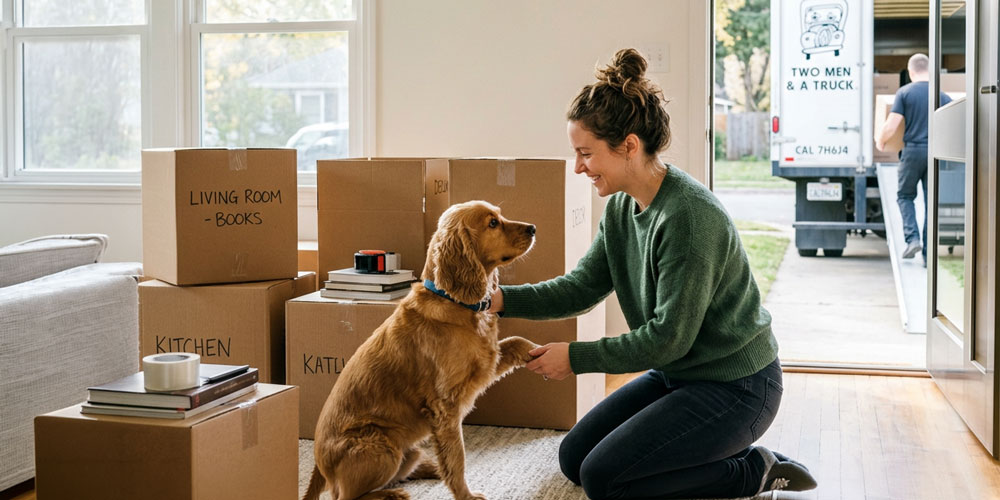
Doors are constantly opening, people are coming and going, and pets can easily become frightened or accidentally escape.
Whenever possible, keep your dog or cat in a quiet room away from the activity or ask a trusted friend or family member to look after them until everything has been moved.
This simple step can dramatically reduce stress and improve their safety.
The First Few Days Matter Most
Once you arrive, resist the temptation to give your pet access to the whole house immediately.
Instead, start with one quiet room containing their bed, food, water, toys, and familiar-smelling blankets. As they become more confident, gradually introduce the rest of the home.
For cats especially, taking things slowly can help them feel far more secure.
Keep Familiar Things Around
One surprising tip is to avoid washing your pet's bedding before the move.
The familiar scent of their blankets and beds provides reassurance in an unfamiliar environment.
Likewise, placing favourite toys around the house can help it feel more familiar from day one.
Don't Forget the Backyard
Your new backyard may look secure, but always inspect fences and gates before letting your dog explore off leash.
New scents and unfamiliar surroundings can encourage even well-trained dogs to wander further than usual.
If your pet will be spending time outdoors, it's also a great opportunity to make sure their flea, tick, and worm prevention is up to date.
Helping Anxious Pets Feel More Comfortable
Some pets simply need a little extra support during big life changes.
Calming diffusers, anxiety supplements, interactive enrichment toys, and maintaining a predictable routine can all help make the transition smoother.
If your pet seems extremely distressed or their behaviour doesn't improve after several weeks, it's worth speaking with your veterinarian for personalised advice.
Summary
Moving house doesn't have to be overwhelming for your pet. By keeping routines consistent, introducing the new home gradually, and giving them plenty of reassurance, you can help them settle in with confidence.
After all, home isn't just a place. For your pet, it's wherever they're with you.